

J A Parker Contractors have delivered many Civil Engineering Schemes over the last 15+ years ensuring full adoption from Water, Highway and Local Authorities.
- Section 38 Road Construction
- Section 104 Drainage and Attenuation Pipe Installation
- Section 106 Sewer Connections
- Section 185 Sewer Diversions and Over-Pumping
- Supply, Installation and Management of Carlow Attenuation Tanks
- Supply and Installation of YW Adopted Pumping Stations and Cassion Shafts
- Installation of Tubosider Attenuation Pipes
- Steel fixing and Concrete Pumping
- Design, Supply and Installation of Pre-Cast Concrete Retaining Walls
- Design and Installation of Gabion Stone Retaining Structures
Groundworks
J A Parker Contractors have the knowledge, skill and ability to transform sites from concept to completion with extensive Groundwork experience in the following:
- Excavating and Concreting Foundations
- Pile cropping, steel fixing and concerting ground beams
- Plastic domestic drainage installation
- Locating live services for connection and proprietary works for service mains.
- Section 278 Highway Works, Kerb laying and footpath construction
- Paving, Block Paving and Landscaping
- Security and Domestic Fencing Installation
Road Construction
Road construction is a vital aspect of civil engineering that involves the planning, design, and construction of roads and highways. It encompasses various activities aimed at creating and improving road networks to facilitate safe and efficient transportation. The road construction process typically includes several stages:
- Planning and surveying
- Design
- Earthwork and grading
- Pavement constructio
- Drainage and utilities
- Signage and markings
- Landscaping and finishing touches
Throughout the construction process, JA Parker follow proper quality control measures and adhere to safety standards.
Sewer Construction
Sewer systems are essential for the collection and transportation of wastewater, preventing pollution and maintaining public health.
Here are some key aspects of sewer construction:
- Planning and Design
- Excavation and Trenching
- Pipe Installation
- Manhole Construction
- Connection to Buildings
- Testing and Inspection
- Backfilling and Surface Restoration
J A Parker follow safety protocols and regulatory guidelines during sewer construction to protect workers, the environment, and public health
Sewer Connections
Sewer connections refer to the process of linking individual buildings or properties to the public sewer system. These connections allow for the proper disposal of wastewater and ensure that it is transported to the treatment facilities. Here are the key steps involved in sewer connections:
- Application and Permits
- Excavation and Trenching
- Pipe Installation
- Connection to the Public Sewer Line
- Inspection and Approval
- Restoration
It’s important to note that sewer connection procedures may vary depending on local regulations and the specific requirements of the sewer system.
Tubosider Attenuation Tank
A Tubosider attenuation tank is a type of underground storage system designed to manage and control stormwater runoff by providing temporary storage capacity. These tanks are commonly used in areas where there is a need to mitigate the effects of heavy rainfall and prevent flooding.
The primary purpose of a Tubosider attenuation tank is to collect and temporarily store excess stormwater runoff, thereby reducing the peak flow rates and volume of water entering the drainage system or nearby watercourses. This helps prevent flooding and minimizes the risk of overloading downstream drainage infrastructure.
Tubosider attenuation tanks are commonly used in various applications, such as commercial and industrial developments, highway drainage, and sustainable urban drainage systems (SuDS). They help control stormwater runoff, reduce the impact of heavy rainfall, and protect downstream infrastructure. Please contact us for further information.

Civil Engineering
J A Parker Contractors have delivered many Civil Engineering Schemes over the last 15+ years ensuring full adoption from Water, Highway and Local Authorities.
- Section 38 Road Construction
- Section 104 Drainage and Attenuation Pipe Installation
- Section 106 Sewer Connections
- Section 185 Sewer Diversions and Over-Pumping
- Supply, Installation and Management of Carlow Attenuation Tanks
- Supply and Installation of YW Adopted Pumping Stations and Cassion Shafts
- Installation of Tubosider Attenuation Pipes
- Steel fixing and Concrete Pumping
- Design, Supply and Installation of Pre-Cast Concrete Retaining Walls
- Design and Installation of Gabion Stone Retaining Structures
Groundworks
J A Parker Contractors have the knowledge, skill and ability to transform sites from concept to completion with extensive Groundwork experience in the following:
- Excavating and Concreting Foundations
- Pile cropping, steel fixing and concerting ground beams
- Plastic domestic drainage installation
- Locating live services for connection and proprietary works for service mains.
- Section 278 Highway Works, Kerb laying and footpath construction
- Paving, Block Paving and Landscaping
- Security and Domestic Fencing Installation

Road Construction
Road construction is a vital aspect of civil engineering that involves the planning, design, and construction of roads and highways. It encompasses various activities aimed at creating and improving road networks to facilitate safe and efficient transportation. The road construction process typically includes several stages:
- Planning and surveying
- Design
- Earthwork and grading
- Pavement constructio
- Drainage and utilities
- Signage and markings
- Landscaping and finishing touches
Throughout the construction process, JA Parker follow proper quality control measures and adhere to safety standards.

Sewer Construction
Sewer systems are essential for the collection and transportation of wastewater, preventing pollution and maintaining public health.
Here are some key aspects of sewer construction:
- Planning and Design
- Excavation and Trenching
- Pipe Installation
- Manhole Construction
- Connection to Buildings
- Testing and Inspection
- Backfilling and Surface Restoration
J A Parker follow safety protocols and regulatory guidelines during sewer construction to protect workers, the environment, and public health
Sewer Connections
Sewer connections refer to the process of linking individual buildings or properties to the public sewer system. These connections allow for the proper disposal of wastewater and ensure that it is transported to the treatment facilities. Here are the key steps involved in sewer connections:
- Application and Permits
- Excavation and Trenching
- Pipe Installation
- Connection to the Public Sewer Line
- Inspection and Approval
- Restoration
It’s important to note that sewer connection procedures may vary depending on local regulations and the specific requirements of the sewer system.
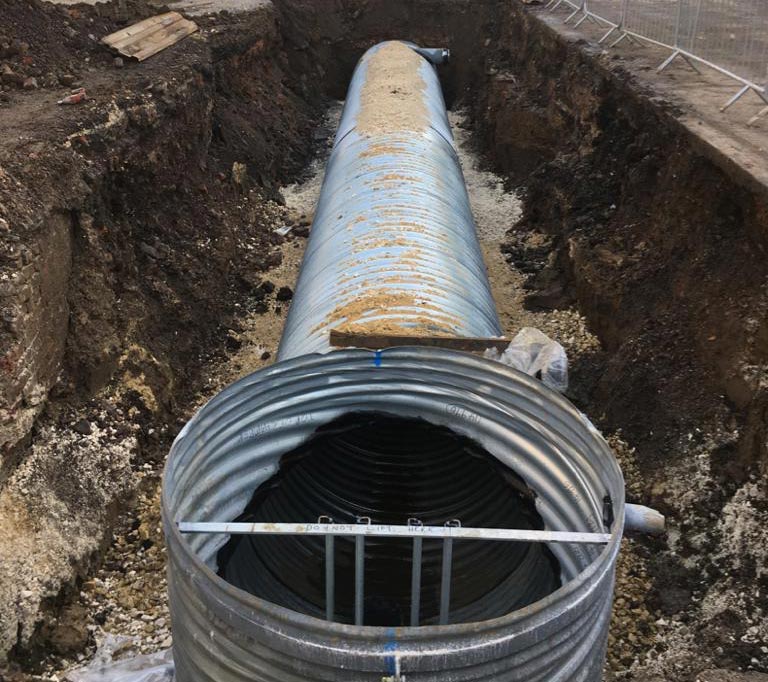
Tubosider Attenuation Tank
A Tubosider attenuation tank is a type of underground storage system designed to manage and control stormwater runoff by providing temporary storage capacity. These tanks are commonly used in areas where there is a need to mitigate the effects of heavy rainfall and prevent flooding.
The primary purpose of a Tubosider attenuation tank is to collect and temporarily store excess stormwater runoff, thereby reducing the peak flow rates and volume of water entering the drainage system or nearby watercourses. This helps prevent flooding and minimizes the risk of overloading downstream drainage infrastructure.
Tubosider attenuation tanks are commonly used in various applications, such as commercial and industrial developments, highway drainage, and sustainable urban drainage systems (SuDS). They help control stormwater runoff, reduce the impact of heavy rainfall, and protect downstream infrastructure. Please contact us for further information.
Preparation and installation of Carlow Attenuation Tank


